Grand Bazaar
With the conquest of Istanbul by Mehmed the Conqueror, the newly redefined Empire was forced to create numerous new institutions. This was because one of the most important cities of the era would now play a pivotal role in the creation of a new identity.
Especially at the forefront of economic tasks, the concept of "product" needed to be defined in its broadest sense.
On the other hand, to "protect" and develop anything, it was necessary to "cover and preserve" it. The "covering" of the Grand Bazaar was undoubtedly undertaken to facilitate such a massive project. If something truly in need of protection were not to be preserved, why undertake such a large-scale organization and investment?
From this perspective, the Grand Bazaar is perhaps one of the most important and complex projects developed by the Ottoman Empire.
During its 500-year existence, the Empire experienced incredible changes, faced both successes and failures, and undertook vast projects. But none of these survive today. On the other hand, massive industries were established, shipyards and mints were built, schools and palaces were built. But few of these maintain their true function today.
Yet, the Grand Bazaar was defined, organized, constructed, developed, and has survived to this day as a giant mechanism that ensured the vitality of the Empire's product identity and economy. Over this long period, it faced numerous significant problems, experiencing earthquakes, burning, and destruction, but each time it was quickly repaired and rebuilt.
Because the Grand Bazaar held a significant distinction among many other covered bazaars around the world. It was more than just a bazaar. It was one of the state's most important economic projects, ensuring the continuity of the empire's product identity and ensuring international competitiveness. It was a major mechanism that monitored and balanced the multifaceted and effective competition between East and West, North and South.
Why else would such a large-scale construction and management organization be established solely for daily shopping? Because the Grand Bazaar was a "symbol of power."**
During the Ottoman period, the Grand Bazaars, including the Bedesten (Covered Bazaar), not only served as treasuries for the palace's valuables but also served as financial centers, facilitating the accumulation of capital through trade. Mehmed the Conqueror commissioned the Cevahir and Sandal Bedestens to generate revenue for Hagia Sophia, and the Istanbul Grand Bazaar flourished around them for 250 years. While the modern-day bedestens have lost their function, the Grand Bazaar remains a significant center for gold and foreign exchange rates in Turkey, driven by the supply and demand indicators generated by the Grand Bazaar! ***
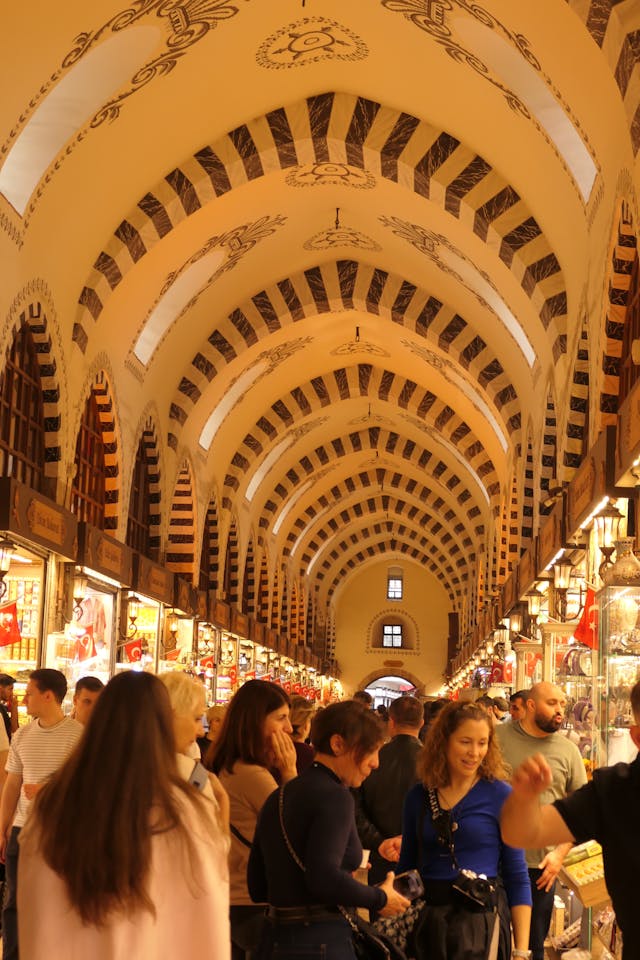
The Grand Bazaar spans 110,868 square meters, boasting 45,000 square meters of indoor space, 3,600 shops on 65 streets, and 14 caravanserais. While many have changed over time, the names of the Grand Bazaar's streets and caravanserais can help identify what was being done and sold there in the past.
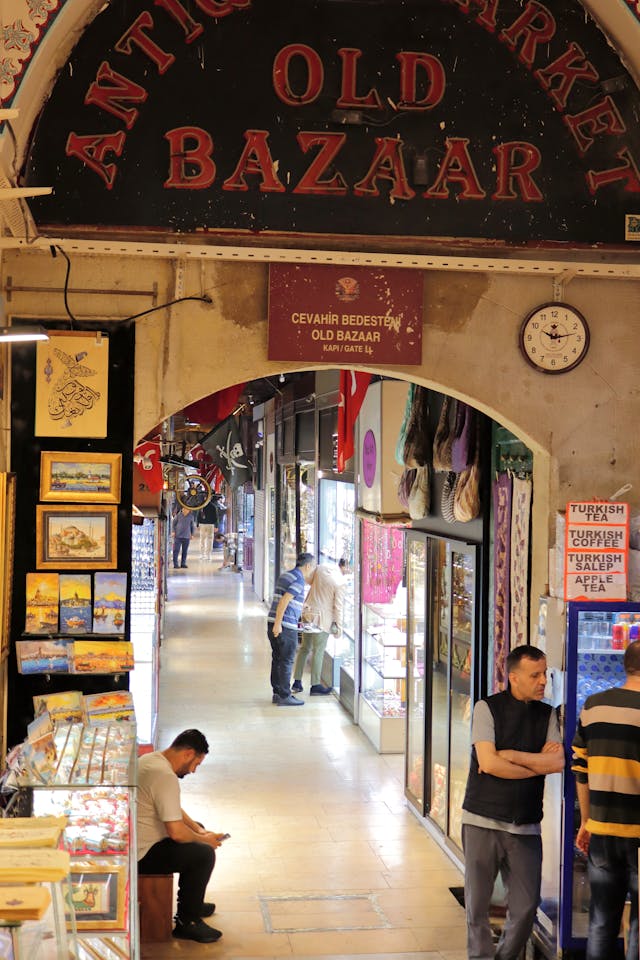
Gates: Beyazıt, Çarşıkapı, Çuhacı Han, Jewelers, Mahmutpaşa, Nuruosmaniye, Örücüler, Sepetçi Han, Takkeciler, Tavukpazarı, and Zenneciler.
Hans: Ağa, Alipaşa, Astarcı, Balyacı, Bodrum, Cebeci, Çukur, Çuhacı, Hatipemin, İçcebeci, İmamali, Kalcılar, Kapılar, Kaşıkçı, Kebapçı, Kızlarağası, Mercan, Perdahçı, Rabia, Safran, Sarnıçlı, Sarraf, Sepetçi, Sorguçlu, Varakçı, Yağcı, Yolgeçen, Zincirli, and Evliya.
Streets: Acıçeşme, Ağa, Altuncular, Aminçiler, Araracıoğlu, Aynaçılar, Basmacılar, Çuhacıhanı, Flea Market, Fez sellers, Ganiçelebi, Hacıhasan, Hacıhüsnü, Hacımemiş, Carpet sellers, Ready-made dress sellers, Yarn sellers, Coffeehouse, Kalpak sellers, Police Station, Karamanlıoğlu, Kavaf sellers, Kazaz sellers, Purse sellers, Lock makers, Sequin makers, Upholsterers, Furriers, Lütfullahefendi, Mercançıkmazı, Guards, Mühürdaremin, Ortakazaz sellers, Knitters' Hamamı, Piece sellers, Polishers, Tassel sellers, Reisoğlu, Painter, Second-hand Booksellers' Bazaar, Sandal, Sandal Bazaar, Serpuç sellers, Sıraodalar, Sipahi, Merchants, Skullcap makers, Tavukpazarı, Slipper makers, Tailor-Mass, Tailors, Tuğcular, Varakçıhan, Yağlıkçılar, Yarımtaşhan, Yeşildirek, Yorgancılar, Yüncühasan and Zenneciler.