Pierre Loti
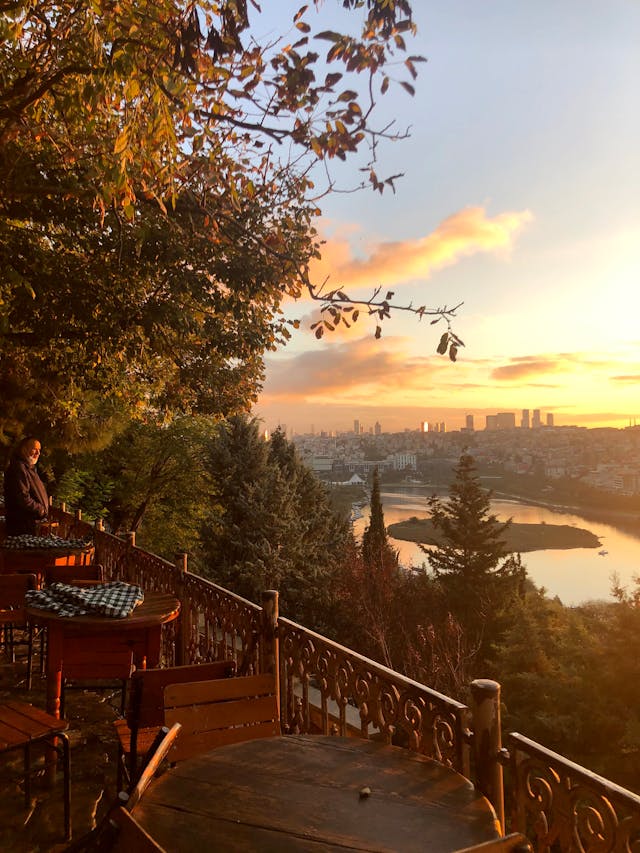
On Pierre Loti Hill, a popular spot for Istanbulites from the 18th century to the present, "history has come alive again."
Climbing these ridges, the best place to enjoy the Golden Horn's famous panorama, leads to the Kahvehane (Cafe) named after the famous French writer Pierre Loti. Pierre Loti, who lived in Istanbul for many years and was a true lover of Istanbul, was actually named "Julien Viaud." The Historic Kahvehane is the ideal place to enjoy this unique view.
It is said that Pierre Loti, who considered Türkiye his second homeland, frequently visited this cafe, known as the "Rabia Kadın Kahvesi" (Rabia Women's Café), and wrote his novel "Aziyade" overlooking the Golden Horn. Today, the area, restored to its original "Turkish neighborhood," serves as a tourist attraction. The area is mentioned in Evliya Çelebi's "Seyahatname" (Travel Book) as the "İdris Köşkü Recreation Area."
Pierre Loti, a popular destination for almost all foreigners and travelers visiting Istanbul in the 19th century, is home to numerous historical structures. The wooden Kashgari Lodge, dating back to 1813 and bearing two inscriptions, is one such example. The Çolak Hasan Lodge, also located at the three-way intersection at the entrance to the facility, features a white, round tombstone inscribed in Persian. The historic building next to the lodge is a Sibyan Mektebi (Children's School). Built by Ottoman historian İdris-i Bitlisi, the school is located just in front of the complex and within the facility grounds, where lies the tomb of a Mevlevi named "İskender Dede," who died in 1589. One of the three wells in front of İskender Dede is the famous "Wishing Well." Regarding this well, Evliya Çelebi writes in his Travelogue that "those who look into the well find their heartfelt desires within." Above the tomb are the graves of the Palace's Chief Horseman (Mirahur-Brigadier General) Ali Ağa and his family. Furthermore, the "Cistern", thought to have been built during the Byzantine period and used during the Ottoman period, still exists in the middle of the facility.
Balat
Balat is a district located on the European side of Istanbul, in the Fatih district, on the shores of the Golden Horn, between the Ayvansaray and Fener districts. It was formed in 2008 by merging the Katip Musluhiddin, Tevkii Cafer, Hızır Çavuş, Tahta Minare, and Hatip Musluhittin neighborhoods.
The name Balat comes from the Greek word palation, meaning palace; it was named for its proximity to the Blachernae Palace within the city walls.
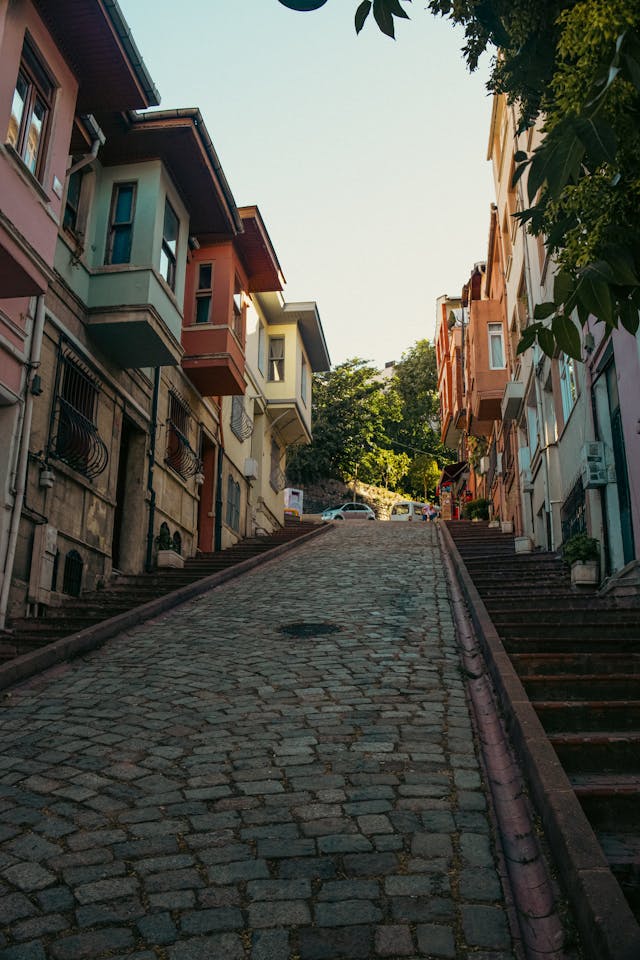
Balat's special significance in Istanbul's history stems from the settlement of Jews from Spain, and until recently, the district remained the primary Jewish neighborhood in Istanbul. Furthermore, the settlement of Jews around Balat attracted Georgian Jews to the area. Sephardic Jews fleeing the Inquisition in Spain came to Istanbul at the invitation of Bayezid II. Since the 15th century, Istanbul's Jewish community has lived in Balat and Hasköy, across the Golden Horn. The two sides were connected by the Jewish Bridge between 1852 and 1962. Surviving examples of historic houses in the district proliferate towards the inner parts of the district. These are generally three-story buildings with narrow facades and bay windows on the second and third floors. The district is notable for its historic structures, narrow streets, and colorful houses. Balat is also a popular spot for photographers, serving as an "open-air photography studio." Numerous people can be seen taking photos on its streets, either individually or in groups. Balat is a district rich in history and culture, blending bohemian, suburban, intellectual, Asian, and European cultures.
As you enter the Old Balat gate, the Yanbol Synagogue is on the right, and a short distance ahead is the Ahrida Synagogue, built by Jews from Ohrid, Macedonia. It is believed to be the oldest synagogue in Balat. However, the current structure dates from the mid-19th century.
Although Balat's Jewish identity is dominant, the neighborhood has always maintained its multicultural character. Records such as the Bostancıbaşı Registers of 1815 indicate that different religious groups, including Armenians, Greeks, and Turks, lived together in Balat. This multicultural structure contributed to Balat's social and urban development.